How to Design Reliable WiFi for a Remote Mining Camp
Camp WiFi affects wellbeing and retention. Good results come from surveys, capacity planning and fair bandwidth management.
14 October 2026 · 3 min read · Mining IT Services editorial
Start with the people, not the floor plan
A 300-room village might have 600 or more devices connecting at 6pm when day shift finishes. Design for that peak: number of devices, applications (video streaming and calls dominate) and the internet capacity available.
Survey the buildings
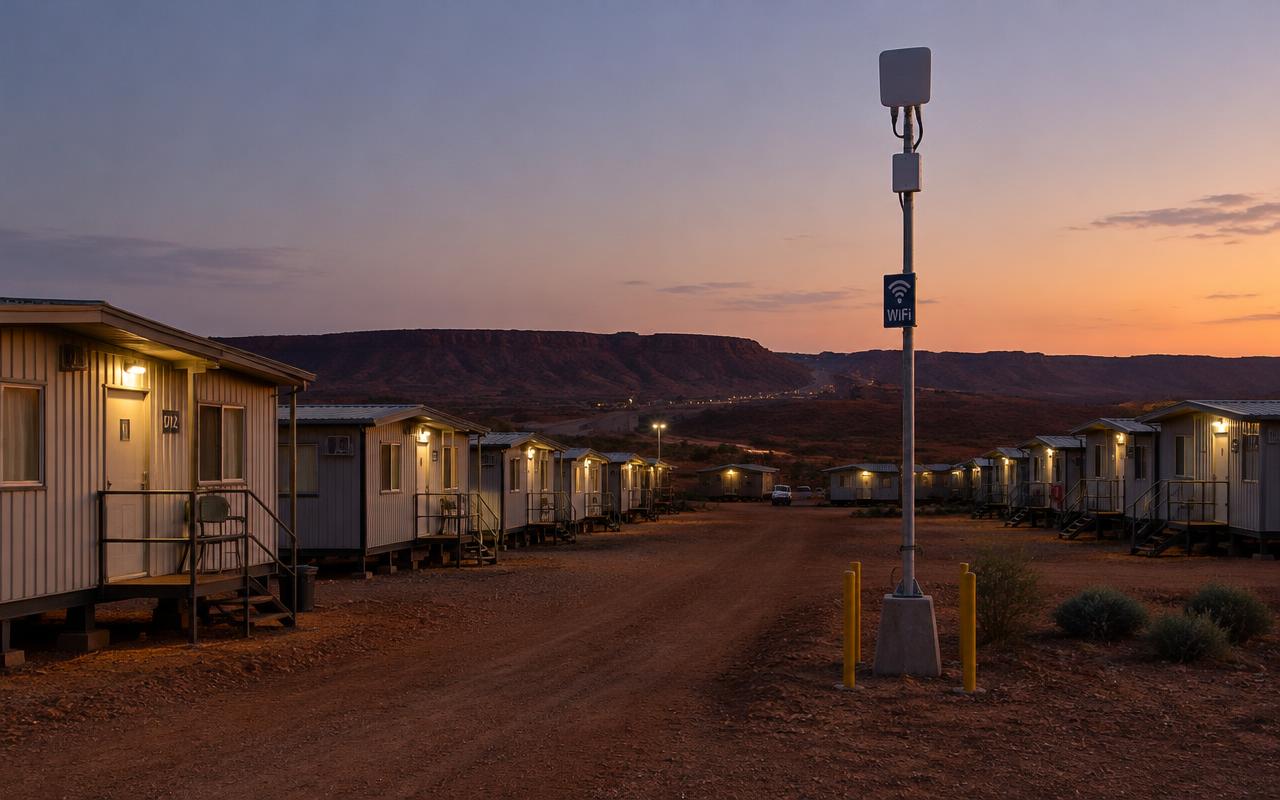
Transportable buildings use materials that attenuate wireless signals. A predictive model followed by an on-site survey determines access point placement. Room coverage often requires access points in corridors or individual rooms rather than a few high-power units.
Backhaul and cabling
Each access point needs a reliable wired connection. Fibre between buildings avoids electrical issues across long distances; wireless bridges can link outlying wings where trenching is impractical.
Fair use and separation
Separate guest, worker and corporate networks. Apply per-user bandwidth limits so a few heavy users cannot saturate the satellite link, and prioritise voice and messaging. A captive portal manages terms of use and authentication.
Monitor and maintain
Centralised monitoring identifies failed access points and congestion before complaints arrive. Keep spares on site and document the network so smart hands can replace units quickly.