Starlink for Mining Operations: What IT Managers Should Consider
Low Earth orbit satellite has transformed remote connectivity. Here is how to deploy it securely and resiliently at a mine or camp.
17 October 2026 · 3 min read · Mining IT Services editorial
Why LEO changes the equation
Traditional geostationary satellite services orbit roughly 36,000 km above Earth, introducing significant latency. Low Earth orbit constellations such as Starlink operate far closer, with much lower latency that makes video calls, VPNs and cloud applications practical at remote sites.
Assessment comes first
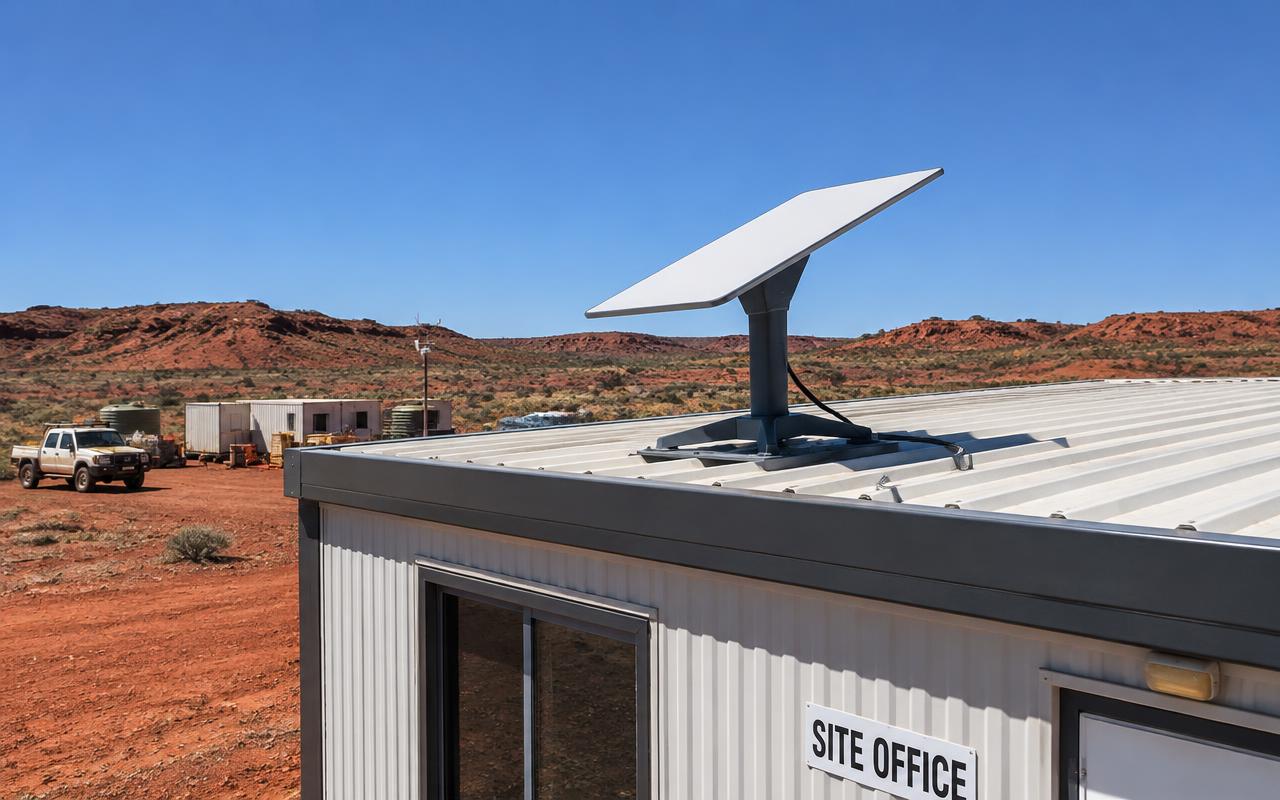
Before ordering terminals, assess the site: sky visibility and obstructions, mounting options, power availability, the number of users and applications, and whether the location suits the available service plans. A terminal on a donga roof surrounded by taller buildings may underperform.
Treat it as a business link
Consumer-style deployments connect the terminal's router directly to users. For business use, place a managed firewall behind the terminal to provide segmentation, VPN, content filtering, traffic prioritisation and monitoring. Separate camp guest traffic from corporate systems.
Plan for resilience
A single terminal is a single point of failure. Consider a second terminal, a cellular link where coverage exists, or a different satellite provider. A multi-WAN firewall can fail over automatically and alert your support team.
Set expectations
Performance varies with location, network load and conditions. Avoid promising specific speeds to users, and design applications to tolerate occasional interruptions.